
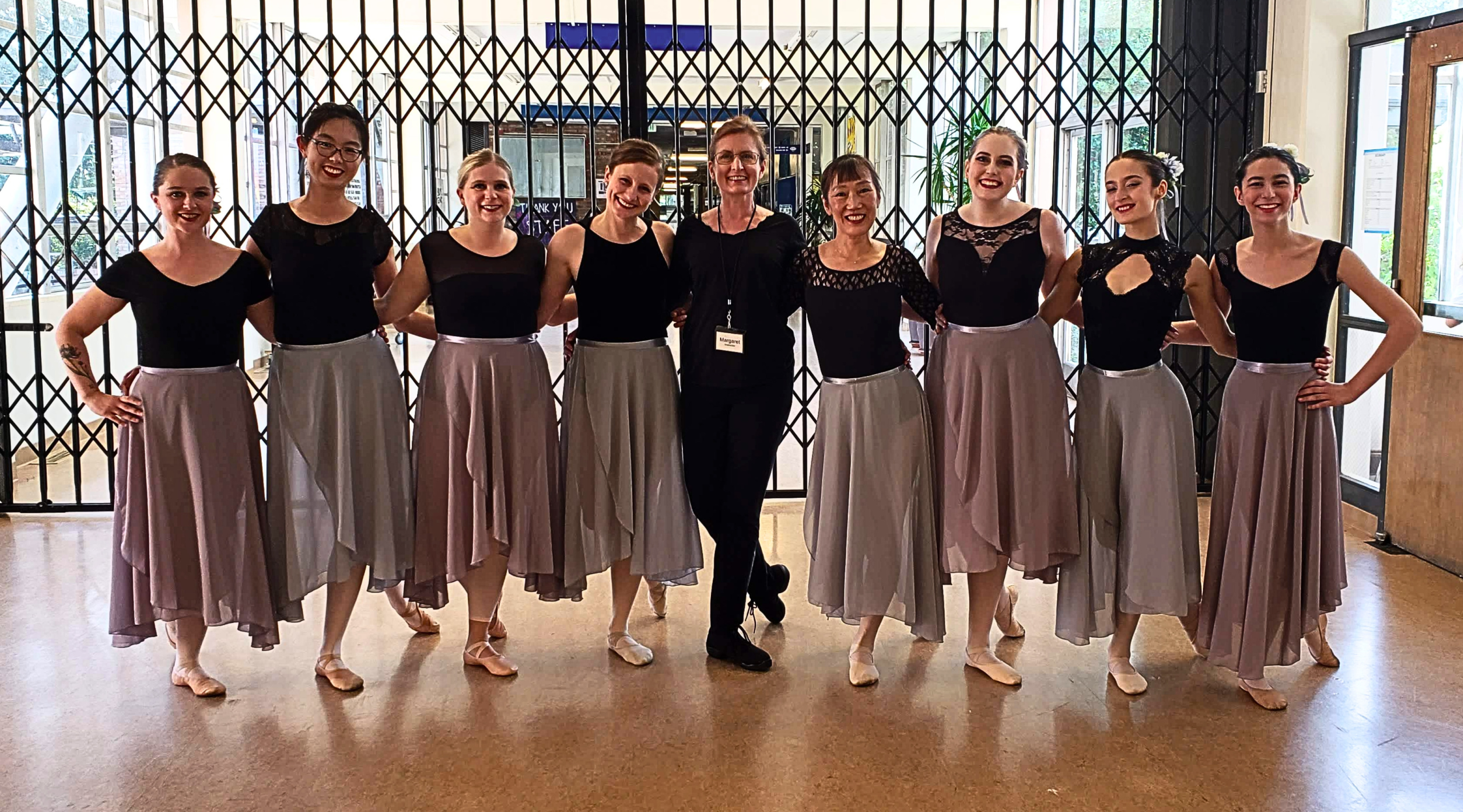
ADI Teacher Feature: Meet Margaret Germani!
At American Dance Institute, our instructors are the heartbeat of our studios. For this edition of our Teacher Feature, we are thrilled to spotlight Margaret Germani. Margaret brings a rare combination of world-class ballet training and a career in science and education to the studio, making her one of the most uniquely accomplished teachers on our faculty.
Seattle families have plenty of options when it comes to dance studios, but Margaret's decades of classical training are part of what sets American Dance Institute apart. If you're comparing dance classes Seattle has to offer, her Vaganova- and Cecchetti-rooted ballet instruction brings a rigor that's hard to find elsewhere in the city.
Margaret has trained in the Vaganova and Cecchetti methodologies and completed her major exam at the Royal Academy of Dance. Her artistic path first brought her to Seattle, where she fell in love with the city while training and performing with Pacific Northwest Ballet. From there, she went on to perform with Pittsburgh Ballet Theatre in Pennsylvania—experience that shaped her deep, technical understanding of classical ballet and informs every class she teaches today.
In the studio, you can find her:
- Teaching classical ballet grounded in the Vaganova and Cecchetti traditions, with an emphasis on strong technique and musicality.
- Guiding dancers with the eye of a former professional performer who loves challenging her students to be proud of their artistic accomplishments.
- Bringing the same rigor, curiosity, and encouragement to the studio that she's spent decades cultivating to classrooms and research endeavors.
Margaret's path to the studio is anything but ordinary. After her performing career, she returned to school to complete her undergraduate degree in Biology at UCLA and MA at UC Riverside, followed by a Doctorate in Education, Organizational Leadership, from Chapman University's Brandman Division, and now Executive MBA in Life Science from Rochester Institute of Technology. For many years, she worked in the Northern California Bay Area as a health and biology professor and bench scientist, all while supporting the development of performing arts communities for youth. During that time, she co-founded the School of Valley Dance Theater in Livermore, CA, and initiated the dance program for the Community Youth Center in Concord, CA.
Margaret went on to serve as Artistic Director of Benicia Ballet Theatre and Managing Partner/Director of Benicia Ballet School, LLC, before recently returning—now retired from those roles—to the city where her love of dance first took root: Seattle. Today, alongside teaching at ADI, she serves as Director of Product Management and Commercial Enablement for Vizgen.
Q&A Corner with Margaret
Q: What is your favorite part about teaching at ADI? Teaching at ADI is much more than teaching technique. The students care about each other. They are a community that supports and encourages each other. They continue to grow in their achievements and I am there to witness their success. It is a role I cherish and I continue to be inspired by my students.
Q: How do the Vaganova and Cecchetti methods shape the way you teach? Good technique is never lost. It teaches the body and mind. It allows you to achieve new levels of performance. Vaganova training gave me great strength and precision. The Cecchetti method challenged my speed and repertoire. Performing with companies of extensive Balanchine ballets opened my eyes to new ways to move. Training in the Royal Academy of Dance syllabus improved my vocabulary and musicality. Studying with Elizabeth at ADI, enhanced my appreciation for what ballet can give to adults who are new to the performing arts.
Outside of the studio, Margaret has two amazing young adult children and loves spending her weekends biking and hiking with her husband. She loves being home in the Pacific Northwest.
Want to take a class with Margaret?
Margaret brings decades of professional training, scientific rigor, and a genuine love of teaching to every student she meets. Every day they are there is a great achievement for both me and them.